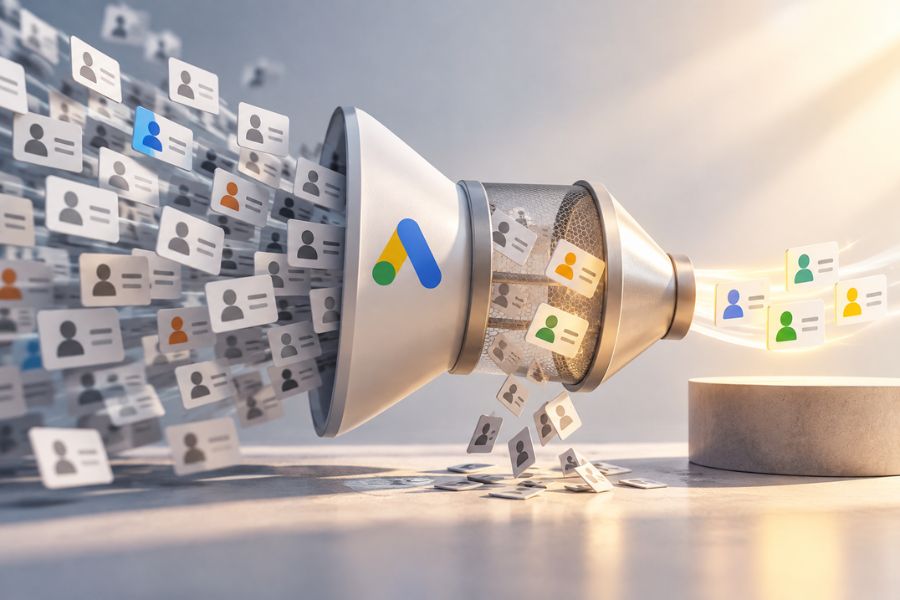
Your website is still ranking. Your SEO reports look healthy. The keywords you have spent years targeting are holding their positions. Yet something has changed: fewer people are clicking through. For businesses selling high-value services or products, this is exactly why generative engine optimization deserves attention. Your next potential customer might be researching your business through ChatGPT, Perplexity, or Google’s AI-powered search features before ever visiting your website.
And that changes how visibility works.
For years, the relationship between rankings and website traffic was relatively straightforward. You earned a position in search results, people clicked your listing, and your website had an opportunity to turn that visit into an enquiry.
Now, part of that research happens directly inside an AI-generated answer.
Your business might be mentioned, recommended, compared, or overlooked without the potential customer ever seeing your traditional search listing.
The uncomfortable part? Your existing SEO dashboard might not tell you the whole story.
The Search Journey Has Changed Before Most Businesses Have Noticed
Think about how someone researches a high-value purchase.
A business owner looking for a cybersecurity provider might previously have searched Google for “best managed security providers” and opened several websites.
Today, that same person might ask ChatGPT:
“Which cybersecurity companies offer managed detection and response for a growing European business?”
They may follow up with questions about pricing, capabilities, certifications, implementation, and alternatives.
By the time they visit a company’s website, they could already have a shortlist.
The same behaviour applies to businesses looking for a marketing agency, investors evaluating financial services, and companies choosing a technology implementation partner.
In high-ticket markets, the buying journey often involves several people, competing priorities, and careful evaluation. AI-powered search gives those buyers another way to gather information and narrow their options.
That does not mean every buyer has abandoned Google. It means the path between discovering a business and contacting it is becoming less predictable.
This creates a problem for marketers who evaluate organic performance almost exclusively through impressions, rankings, and clicks.
A stable ranking does not guarantee stable traffic. And reduced traffic does not automatically mean your brand has lost all visibility.
You need to investigate what is actually happening.
What Is Generative Engine Optimization?
Generative engine optimization, or GEO, is the practice of making your business and its content easier for AI-powered search systems to discover, understand, evaluate, and reference.
Traditional SEO primarily focuses on improving a website’s visibility in search engines.
GEO extends that work into search experiences where an AI system gathers information and creates an answer for the user.
In practical terms, your objective is to help relevant AI experiences accurately understand:
- What your business does and who it serves.
- Which problems your services solve.
- What makes your business credible.
- Where independent information supports your expertise.
- Why your offering may be relevant to a particular question.
There is no guaranteed formula for becoming an AI recommendation.
Anyone promising a fixed position in ChatGPT or guaranteed inclusion in AI Overviews is making a claim they cannot reliably support.
These systems produce different answers depending on the question, context, available sources, and how information is retrieved.
Your job is to build the strongest possible foundation for discovery and credibility.
How ChatGPT, Perplexity, and Google AI Overviews Find Information
These tools do not all work identically, and their underlying methods continue to change.
Understanding the broad differences is useful because it prevents businesses from chasing questionable optimisation tricks.
ChatGPT: Search, Context, and Relevant Sources
When ChatGPT uses web search, it can retrieve information from external websites and use that material to help answer a user’s question.
The information it surfaces depends on the query, the available sources, and the context of the conversation.
Your website needs to communicate its expertise clearly. It should be technically accessible to relevant search crawlers and contain information that answers genuine customer questions.
For ChatGPT Search specifically, allowing OAI-SearchBot access is part of making a website eligible to appear in search results.
Eligibility, however, is not a promise of visibility.
Perplexity: Research With Referenced Sources
Perplexity is designed around answering questions using retrieved information, often with visible citations.
For businesses, that makes the quality and accessibility of source material particularly relevant.
A detailed service explanation, useful technical resource, or credible independent reference may help establish relevance to a research question.
However, being cited as a source and being recommended as a service provider are different outcomes.
Both deserve attention, but they should not be confused.
Google AI Overviews: AI Responses Within Search
Google’s AI Overviews and AI Mode build on Google’s search infrastructure.
Google’s own guidance makes an important point: existing SEO fundamentals remain relevant. There is no special GEO markup that guarantees inclusion.
Your pages still need to be discoverable, technically accessible, relevant, and useful.
Strong internal linking, informative content, accessible text, and accurate structured data remain important.
This is precisely why abandoning SEO to pursue GEO would be a mistake.
What Needs to Change in Your Content Strategy?
Many websites were built around keywords rather than customer decisions.
They have pages targeting broad phrases, generic service descriptions, and blog articles repeating information that already exists everywhere else.
That approach was never particularly persuasive for a high-ticket buyer. AI-powered research makes its weaknesses more obvious.
Answer the Questions Buyers Actually Ask
A business evaluating an expensive service wants specific answers.
What does the implementation involve? Which businesses are a good fit? How is the service delivered? What limitations should the customer understand? What happens after signing the contract?
These questions deserve clear answers on your website.
Imagine a company offering enterprise-level software integration.
A generic article titled “Benefits of Digital Transformation” contributes little to a serious buyer’s evaluation.
An article explaining how to evaluate integration costs, implementation risks, internal responsibilities, and ongoing support is substantially more useful.
This content also creates opportunities to address the detailed, conversational questions people ask AI tools.
Build Pages Around Clear, Verifiable Information
Every important service page should explain the offering in straightforward language.
Start with the problem you solve, describe the service, identify the audience, and explain the process.
Then support those claims with evidence.
For a high-ticket business, that evidence could include relevant case studies, demonstrated expertise, technical qualifications, documented methodologies, or detailed examples of completed work.
Avoid vague statements such as “We provide innovative solutions for modern businesses.”
They say almost nothing.
A precise explanation of what your team actually delivers is more useful to buyers and easier for retrieval systems to interpret.
Connect Your Expertise Across the Website
Your content should form a coherent body of knowledge.
A detailed article about AI search should connect naturally to your SEO service. A discussion of conversion performance should connect to website strategy. A case study should reinforce the specific service it demonstrates.
At Onum, our approach to SEO & GEO combines the technical foundation of organic search with the changing ways people discover and evaluate businesses.
That connection matters because an isolated article rarely communicates the full depth of a company’s expertise.
The supporting service pages, projects, and related resources provide context.
Your Reputation Beyond Your Website Matters Too
Businesses often focus all their optimisation efforts on their own domains.
But prospective buyers investigate what other people say about a company.
AI-powered research can draw on multiple sources, including third-party publications, industry websites, directories, and public discussions.
That makes your external digital presence important.
Relevant coverage, professional profiles, independent reviews, trustworthy citations, and genuine partnerships can help establish a more complete picture of your business.
The emphasis should be on credible, accurate information.
Buying artificial mentions across unrelated websites is not a serious long-term strategy.
Neither is publishing hundreds of low-quality articles with the hope that an AI system will repeat your business name.
A smaller number of credible references can be more valuable to a buyer than a large amount of promotional noise.
If your company has expertise worth sharing, make it available through appropriate industry publications, professional communities, and useful collaborations.
What We’re Seeing With a Multilingual Client
One of the encouraging developments we’ve observed at Onum involves a client with a multilingual content strategy.
Through its existing website content and ongoing search visibility work, the business has begun appearing in AI-generated answers relevant to its industry.
That matters because it shows the relationship between useful content and discovery can extend beyond traditional search results.
It does not prove that every AI mention becomes a qualified lead.
Nor does it mean the business should stop investing in conventional SEO.
The more useful takeaway is that a website built to explain its expertise clearly can support several discovery channels.
Our Futora project illustrates the type of search-focused work we develop with clients, connecting content strategy with the questions their audiences are actually asking.
When evaluating examples like this, we separate observed visibility from confirmed business outcomes. The distinction matters.
What Should You Actually Measure?
If your organic clicks decline while rankings remain relatively stable, start by investigating the cause.
Check whether the decline affects particular pages, queries, devices, markets, or search intents.
Then evaluate AI-related visibility separately.
Useful areas to examine include brand references within relevant AI answers, citations of your website, referral traffic from AI search experiences, and enquiries where prospective customers mention discovering you through an AI assistant.
You should also examine your overall lead quality.
A business that receives fewer casual website visitors but continues attracting strong enquiries may be experiencing something very different from a business losing commercially valuable demand.
Not every AI platform provides comprehensive attribution data, so your measurement will remain imperfect.
That is a reason to combine different signals rather than manufacture certainty.
What Is Not Worth Doing
Let’s be clear about the activities that do not deserve your budget.
You should not abandon a functioning SEO strategy because someone says traditional search is finished.
You should not pay for guaranteed ChatGPT rankings, generate dozens of nearly identical articles, purchase irrelevant brand mentions, or rebuild your website around an unproven technical trick.
You should also resist treating an AI mention as equivalent to revenue.
Generative engine optimization has commercial potential, but its measurement and attribution are still developing.
For many businesses, traditional organic search will continue to be a major source of measurable discovery and demand.
The sensible response is to evolve your search strategy, not replace it overnight.
A Practical Starting Point for High-Ticket Businesses
Begin with the questions that influence purchase decisions.
Ask your sales team which concerns repeatedly come up before a prospect signs. Review the information buyers request during proposals. Identify the objections that delay a decision.
Then examine whether your website answers those questions properly.
Search for your brand and service category across relevant AI tools. Review the answers critically, including factual errors, missing competitors, questionable citations, and gaps in your own content.
Next, strengthen the pages with the greatest commercial importance.
Improve the substance of your service descriptions, publish credible evidence, connect related content, and ensure your technical SEO remains healthy.
Finally, monitor changes over time.
Repeat relevant prompts, record what appears, and compare observations with qualified enquiry data where possible.
The objective is informed decision-making.
Not chasing screenshots of your brand appearing in an AI response.
FAQ
Is generative engine optimization replacing SEO?
No. GEO builds on many of the same foundations as SEO, including useful content, technical accessibility, clear website structure, and credibility. Both deserve consideration within a modern search strategy.
Can a business guarantee visibility in ChatGPT or AI Overviews?
No. AI-powered search results depend on multiple changing factors. A business can improve its discoverability and the quality of its information, but no agency can guarantee a specific recommendation.
Does GEO matter for businesses with a small number of expensive customers?
Yes, potentially. When each customer represents significant commercial value, being considered during the research stage can matter. The priority should be relevant visibility and qualified opportunities, rather than volume alone.
How can I tell whether AI search is influencing my leads?
Combine referral data, monitored AI search visibility, enquiry forms, and conversations with prospective customers. Attribution will not always be complete, but these signals can help identify meaningful patterns.
Let’s Talk About Where Your Customers Are Finding You
If you’re investing in SEO but aren’t sure how AI-powered search is changing your visibility, we’d be happy to take a closer look. Let’s talk about your current performance, the opportunities worth investigating, and what makes commercial sense for your business.