Your online store has hundreds of products. Your Google Merchant Center account is connected, your product feed is active, and your inventory appears to be syncing correctly.
Everything looks ready.
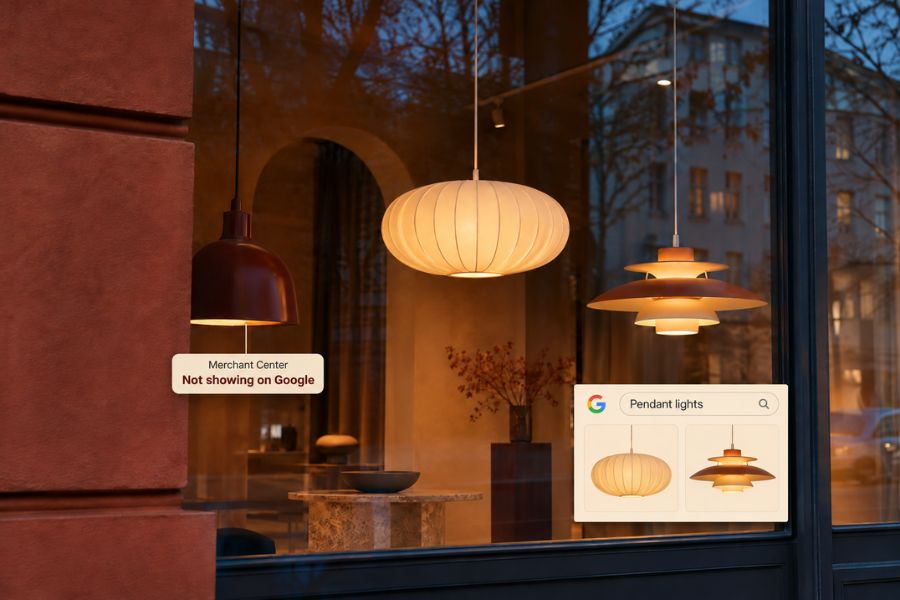
But when you search for your products on Google, competitors dominate the results. Your products are difficult to find, or they aren’t appearing where you expect them.
This is where Google Merchant Center optimization becomes important.
For e-commerce businesses, especially those selling premium or specialised products, being eligible to appear on Google is only the beginning.
The quality of your product information, website experience, and advertising strategy influences how effectively you reach potential customers.
And sometimes, the problem starts with something as simple as an inaccurate product title.
Being Listed on Google Doesn’t Guarantee Visibility
Google Merchant Center allows retailers to provide product information that can be used across Google’s shopping experiences.
Depending on eligibility and configuration, products may appear through free listings or paid Shopping campaigns.
But submitting a product feed doesn’t guarantee that every product will receive meaningful exposure.
Google considers several factors when determining how products appear, including relevance, available product data, eligibility, and the shopping experience.
Your products also compete against listings from other retailers.
If competitors provide more complete or relevant information, your products may be at a disadvantage.
Before increasing your advertising budget, it’s worth examining whether Google has the information it needs to understand what you’re selling.
1. Your Product Titles Aren’t Descriptive Enough
A product title should help customers identify the item quickly.
But many online stores use titles that are too generic.
Imagine a retailer selling premium lighting.
A product titled “Modern Pendant Light” provides limited information.
A more descriptive title might include the brand, model, material, size, or other relevant characteristics.
These details help shoppers understand the product and can improve the relevance of the information supplied to Google.
However, longer doesn’t automatically mean better.
Avoid filling titles with repeated keywords, promotional claims, or unnecessary information.
The objective is accuracy and clarity.
Your titles should reflect the actual product and remain consistent with the information on your website.
A thoughtful SEO & GEO strategy should consider both traditional product-page optimisation and the quality of product information supplied to shopping platforms.
2. Your Product Feed Is Missing Important Attributes
Your product feed is one of the main ways Google receives information about your inventory.
Depending on the product category and market, relevant attributes may include:
- Product ID, title, description, price, and availability.
- Brand, GTIN, or manufacturer part number where applicable.
- Colour, size, material, and other product-specific characteristics.
- Product images and the correct landing-page URL.
Missing or inaccurate attributes can limit eligibility, cause disapprovals, or make products less useful to shoppers.
For example, a clothing retailer may need to provide accurate size and colour information.
A technology retailer may need to include appropriate product identifiers.
GTINs are particularly important for products that have valid manufacturer-assigned identifiers.
However, you should never invent a GTIN or use an incorrect identifier simply to complete a field.
Your product data needs to reflect reality.
3. Your Prices and Availability Don’t Match Your Website
Imagine someone discovers your product through Google.
The listing shows that the item is available for €190.
They click through to your website and discover a different price or that the product is out of stock.
That creates a poor shopping experience.
It can also lead to product data issues in Merchant Center.
Google expects important product information, including price and availability, to remain consistent between submitted data and the landing page.
For WooCommerce stores, this makes reliable product synchronisation particularly important.
Stock changes, sale prices, product variations, and currency settings should be handled correctly.
If your store frequently changes inventory, monitor whether the feed updates accurately.
A product feed that worked correctly during the initial setup may develop problems as your catalogue changes.
4. Your Product Images Aren’t Helping Customers Choose
Product images influence how shoppers evaluate an item before visiting your website.
A customer comparing premium furniture, clothing, or specialist equipment needs to understand what they’re looking at.
Low-resolution images, inconsistent presentation, or photographs that don’t clearly show the product can weaken the experience.
Google also has specific requirements for product images.
Use accurate, high-quality photographs that represent the item being sold.
Where appropriate, provide additional images showing relevant angles, materials, or product details.
Your website should support this visual information with useful descriptions and specifications.
For higher-value products, customers often need more reassurance before purchasing.
Clear product photography and accurate information can reduce unnecessary uncertainty.
5. Your Product Pages Are Missing Structured Data
Product structured data helps Google understand information published on individual product pages.
For eligible merchant listings, this can include product names, images, offers, prices, availability, and additional supported details.
Google recommends using appropriate Product and Offer structured data on pages where customers can purchase the product.
For WooCommerce websites, structured data may already be generated by the platform or installed plugins.
But that doesn’t mean the implementation is necessarily complete or correct.
Conflicting plugins, missing properties, or outdated values can create inconsistencies.
Use Google’s Rich Results Test and Search Console reports to identify supported structured data issues.
Also make sure the structured data matches what customers actually see.
A reliable e-commerce website should have a technical foundation that supports product discovery and purchasing.
Remember that structured data creates eligibility for supported search enhancements. It doesn’t guarantee a particular appearance or ranking.
6. You’re Ignoring Merchant Center Diagnostics
Merchant Center provides information about product status and issues affecting visibility.
Some products may be approved and showing.
Others may be under review, hidden, limited, or disapproved.
These statuses deserve regular attention.
Check whether products have missing attributes, inconsistent prices, image problems, or policy-related issues.
Prioritise products and categories with commercial importance.
For a retailer selling high-value products, a problem affecting a small number of important items could matter more than a minor issue affecting numerous low-demand products.
You should also review available performance information.
Identify which products receive exposure and which categories generate meaningful traffic.
When running paid campaigns, connect those findings with Google Ads performance.
Product visibility is useful, but profitability and customer demand should still guide investment decisions.
What Isn’t Worth Doing
Don’t increase your Shopping budget before investigating product feed problems.
Don’t fill product titles with repeated keywords.
Don’t invent product identifiers or copy inaccurate specifications from competitors.
And don’t install multiple feed plugins without understanding how they interact.
More tools don’t automatically create better product data.
You should also avoid treating every product equally.
Some products may deserve greater attention because of their margins, demand, or strategic importance.
Focus your optimisation efforts where they can support meaningful business outcomes.
How to Improve Your Product Visibility
Start with a Merchant Center review.
Check product eligibility, account diagnostics, and the quality of your submitted information.
Identify missing attributes and inconsistencies between the feed and your website.
Then improve commercially important product titles, descriptions, images, and landing pages.
Validate structured data and ensure your inventory synchronisation works reliably.
Finally, monitor how products perform across organic shopping experiences and paid campaigns.
At Onum, we believe e-commerce visibility should be connected to a wider commercial strategy.
Getting products onto Google is useful.
Helping the right customers discover accurate, compelling product information is where the real opportunity begins.
FAQ
What is Google Merchant Center optimization?
Google Merchant Center optimization involves improving product information, feed quality, eligibility, and related website data to help products appear accurately across Google’s shopping experiences.
Why aren’t my products showing on Google Shopping?
Possible reasons include disapproved products, missing attributes, feed errors, limited eligibility, account issues, or competition. Approved products are not guaranteed to appear for every search.
Does product structured data improve Google Shopping visibility?
Product structured data helps Google understand your product information and can make pages eligible for supported merchant listing experiences. It doesn’t guarantee rankings or visibility.
Can WooCommerce connect to Google Merchant Center?
Yes. WooCommerce stores can connect through compatible integrations that synchronise product information. The setup should be tested to ensure prices, availability, and product attributes remain accurate.
Let’s Make Your Products Easier to Find
If your online store has a strong product catalogue but isn’t getting the visibility or sales opportunities you expect, we’d be happy to investigate what’s holding it back. Let’s talk about your Merchant Center setup, your product pages, and how a more effective e-commerce search strategy could support your business.