A potential customer visits your website, opens your main service page and spends a few seconds trying to understand what you actually offer.
If the explanation is unclear, the benefits are difficult to identify or the next step isn’t obvious, they may leave without contacting you.
The good news is that improving your service page content doesn’t always require a complete redesign. With 30 focused minutes, you can make meaningful improvements to the way your business communicates its services.
Here’s where to start.
Step 1: Rewrite Your Main Heading (5 Minutes)
Your main heading should immediately explain what you offer and who it helps.
Avoid vague statements such as:
“Taking Your Business to the Next Level.”
Instead, communicate the actual service.
For example:
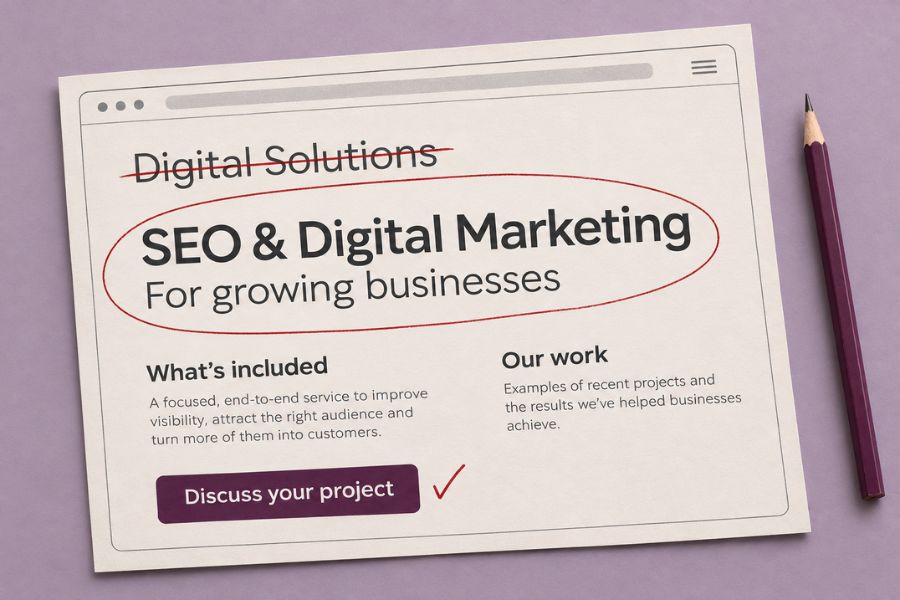
Before: Digital Solutions for Modern Businesses.
After: SEO and Digital Marketing Services for Growing Businesses.
The second version gives visitors a much clearer understanding of what the company does.
Try answering these three questions:
- What service are you offering?
- Who is it designed for?
- What problem does it help solve?
You don’t need to fit everything into one headline. Make the main message clear and use the supporting text to provide more context.
Step 2: Explain Who the Service Is For (5 Minutes)
Visitors should be able to recognise whether your service is relevant to their situation.
Add a short section explaining the types of customers you work with and the problems you help them address.
For example, a web development agency might work with:
- Businesses launching their first professional website.
- Established companies looking to replace an outdated website.
- E-commerce businesses that need better functionality.
- Companies looking to improve their online lead generation.
Specific descriptions help visitors understand whether they’re in the right place.
They also prevent your service page from sounding like a generic description that could belong to any competitor.
Step 3: Describe What’s Actually Included (7 Minutes)
One of the most common weaknesses in service pages is a lack of detail.
Statements such as “We provide complete digital marketing solutions” don’t tell potential customers what they’re actually buying.
Replace general descriptions with concrete deliverables.
For example, a website development service could explain that a project includes:
- Website structure and page planning.
- Custom design and development.
- Mobile responsiveness.
- Technical SEO foundations.
- Contact forms and integrations.
- Testing before launch.
Only include deliverables that your business genuinely provides.
If your service involves a process, explain the main stages so customers understand what happens after they get in touch.
You can also link to relevant website development services to give visitors a clear route to further information.
Step 4: Add Evidence That Supports Your Claims (5 Minutes)
Anyone can write that their business delivers excellent results. Potential customers need reasons to believe it.
Look at the evidence you already have available.
This could include:
- Relevant client projects.
- Before-and-after examples.
- Genuine testimonials.
- Measurable results with appropriate context.
- Industry experience and qualifications.
- Examples of completed work.
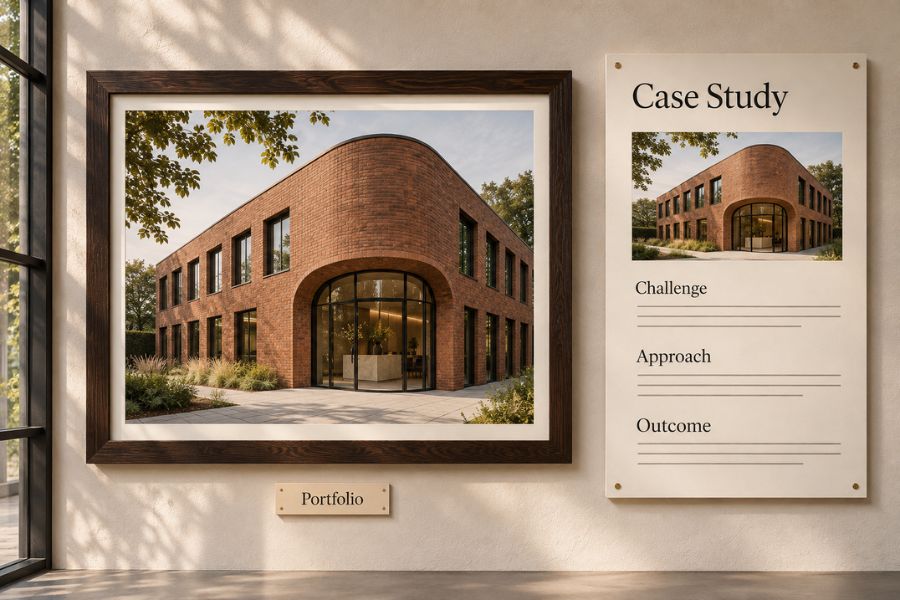
For example, instead of simply stating that you develop websites for ambitious businesses, show a relevant project and explain the challenge, what you delivered and the outcome.
Our Motiwai project is an example of how a real client project can help visitors understand the type of work an agency delivers.
Never invent testimonials or present hypothetical outcomes as actual client results.
Step 5: Make the Next Step Obvious (4 Minutes)
Imagine someone has read your entire service page and wants to learn more.
What should they do?
Your call to action should make the next step clear.
Examples include:
- Request a consultation.
- Discuss your project.
- Get in touch with our team.
- Request a proposal.
Avoid using multiple competing calls to action that make visitors unsure where to go.
Place your primary CTA somewhere visible near the beginning of the page and repeat it after important sections where appropriate.
Also explain what happens after someone submits an enquiry. Will they receive a response? Will someone arrange a consultation? Will they be asked for additional information?
A little clarity can make the decision easier.
Step 6: Review Your Basic SEO Elements (4 Minutes)
Before finishing, check the essential SEO elements of your service page.
SEO Title: Does it describe the actual service and include your primary keyword naturally?
H1: Is there one clear main heading that accurately describes the page?
Meta Description: Does it explain what visitors can expect and give them a reason to click?
Internal Links: Does the page link to relevant services, projects and supporting articles?
For example, a website development page could naturally connect to your SEO & GEO services when explaining how a new website can support organic visibility.
Internal links should help visitors discover related information rather than simply repeat keywords.
A Quick Service Page Review Checklist
Before publishing your changes, check the following:
- The main heading explains the service.
- The target audience is clearly identified.
- Deliverables and processes are explained.
- Genuine evidence supports your claims.
- The primary CTA is easy to find.
- Mobile visitors can read and navigate the page.
- SEO title and meta description are relevant.
- Internal links lead to useful related pages.
Common Mistakes to Avoid
Writing About Your Company Instead of Your Customer
Visitors usually want to understand how you can help them. Keep the focus on their needs, questions and potential challenges.
Using Generic Marketing Language
Words such as “innovative”, “leading” and “tailored” don’t communicate much without specific explanations.
Adding More Content Without Improving Clarity
A longer service page isn’t automatically a better one. Every section should answer a relevant question or help visitors make a decision.
FAQ
How long should a service page be?
There is no universal ideal word count. Include enough information to explain your offer, process, evidence and next steps without unnecessary repetition.
Should every service have its own page?
When your business offers distinct services with different audiences, requirements and search intent, dedicated pages can make the information clearer and more useful.
Can improving service page content help SEO?
Yes, clearer and more useful content can help search engines and visitors understand the page. However, content improvements alone don’t guarantee higher rankings.
What to Do Next
Choose your most important service page and spend 30 minutes applying these six steps.
You may discover that a few carefully considered changes can make your offer much easier to understand.
If your website needs more substantial improvements, from its structure and messaging to its design and conversion journey, let’s talk about your project.
Sources
Google Search Central, SEO Starter Guide:
https://developers.google.com/search/docs/fundamentals/seo-starter-guide
Google Search Central, Creating Helpful, Reliable, People-First Content:
https://developers.google.com/search/docs/fundamentals/creating-helpful-content